

The training brought together approximately 100 participants, including leaders and staff from the VNRC HQs, representatives of the IFRC, as well as representatives from local chapters of the VNRC and local authorities in eight project provinces: Bac Ninh, Cao Bang, Ha Tinh, Lao Cai, Quang Tri, Thai Nguyen, Thanh Hoa, and Tuyen Quang.
Initial assessments indicate that the storms and their aftermath in 2025 caused significant damage to housing, livelihoods, and living conditions across provinces
including Bac Ninh, Cao Bang, Ha Tinh, Lao Cai, Quang Tri, Thai Nguyen, Thanh Hoa, and Tuyen Quang. In addition to human losses, many households are facing food shortages, lack of clean water, and severe housing damage, requiring coordinated, targeted, and timely relief efforts.
In this context, the training aimed to standardize project implementation approaches, strengthen the capacity of VNRC staff at all levels, and ensure that humanitarian relief activities are delivered effectively, transparently, and promptly to affected populations.
In his remarks, Vice President Vu Thanh Luu emphasized: “With a total budget of nearly VND 23 billion, this is not only a financial figure but also a strong affirmation of our commitment: To leave no one behind, in the spirit “For everyone, everywhere” of the VNRC.
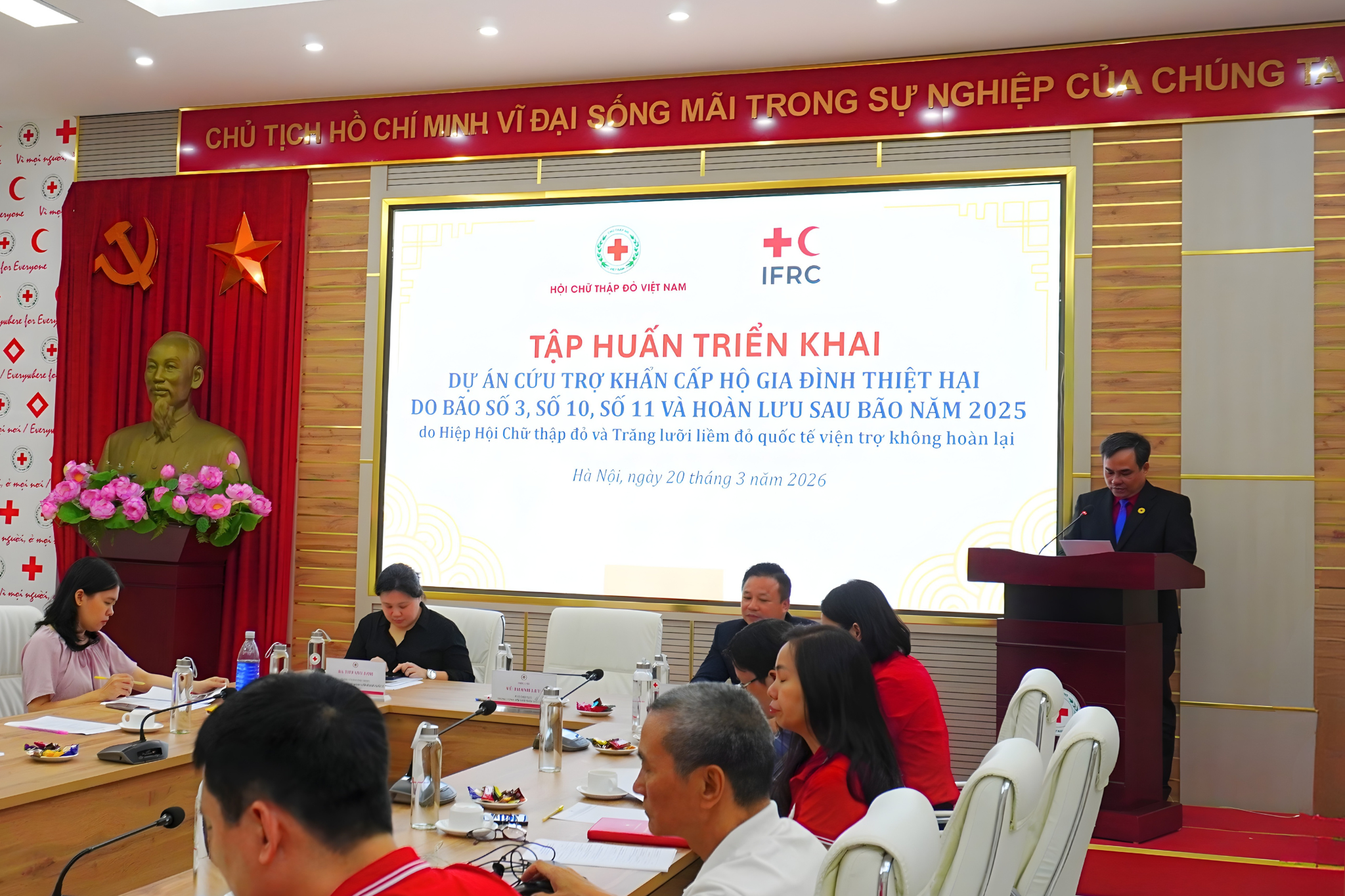
The one-day training was conducted in a hybrid format, combining in-person and online participation. Key contents included an introduction to the project, discussions on practical issues and challenges, guidance on implementation at the local level, as well as regulations on financial management, settlement, and monitoring.
Delegates actively discussed practical situations at the grassroots level, helping to clarify difficulties and bottlenecks during implementation. By the end of the training, all objectives had been achieved. Participants gained a clear understanding of the project’s content, procedures, and implementation methods, reached consensus on operational approaches at the local level, and enhanced their capacity in coordination, management, and collaboration in emergency relief efforts.